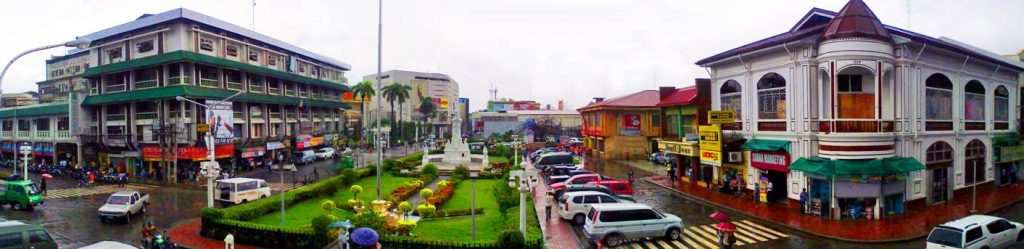
Zamboanga City, Philippines with it’s 98 Barangays is the birthplace of the Chavacano language
Zamboanga City, situated at the tip of the Zamboanga Peninsula, is part of Region IX on the island of Mindanao and is recognized as one of the most highly urbanized cities in Mindanao. It serves as an economic powerhouse and a strategic gateway in Southern Philippines, with critical infrastructure such as an international airport and a major seaport, and is home to the Philippine Air Force, Navy, Army, and Coast Guard.
Daily topics of Zamboanga City in Chavacano
10/27/25
Portion of Cemetery Collapses into Sea
A section of a Zamboanga City cemetery collapsed after a damaged seawall gave way. Graves fell into the sea as soil was eroded by waves. Local officials have appealed for immediate repairs, while the city engineer’s office has already inspected the site and recommended solutions.
Smuggled Cigarettes Seized
Authorities in Zamboanga City recently seized around ₱6.8 million worth of smuggled cigarettes in two law enforcement operations. A raid on a warehouse in Talon-Talon netted ₱5.3 million in cigarettes, while a Coast Guard patrol intercepted ₱1.5 million worth from a motorboat off Maasin village.
Weather: Low Pressure Area Near Zamboanga
PAGASA is monitoring a low pressure area near Zamboanga City, but as of today it has a low chance of developing into a tropical depression. Residents are advised to stay updated on weather reports.
Batang Pinoy: Weightlifting Medals for Zamboanga
Zamboanga City athletes won additional medals in weightlifting at the Batang Pinoy national youth sports competition, continuing their strong performance this year.
Geographic and Strategic Importance
Located at the southernmost tip of the peninsula, Zamboanga City acts as a commercial and industrial hub for the region.
Its international airport and seaport facilitate trade, travel, and logistics, strengthening connections to both local and global markets.
Economic Ranking
National Standing: Zamboanga City ranks as one of the top economic centers in the Philippines and is classified as highly urbanized. It accounted for more than P139.47 billion in economic value in 2022, demonstrating consistent growth post-pandemic.
Mindanao Ranking: Among Mindanao cities, Zamboanga City’s economy is the third-largest, following Davao City and Cagayan de Oro. It is the leading contributor to the Zamboanga Peninsula, representing more than 32% of the regional GDP—the largest share of any city or province in the region.
Competitiveness: Among the 148 cities nationwide, Zamboanga ranked 16th in the “Overall Competitiveness” category, reflecting both economic strength and infrastructure prominence.
Security and Military Presence
The city hosts key military installations: Air Force, Navy, Army, and Coast Guard units, underscoring its role in national security and regional stability.
Summary Table: Economic Status
| Rank in Mindanao | Rank Nationally | GDP Contribution (Region IX) | Key Infrastructure |
|---|---|---|---|
| 3rd largest city | Top 20 cities | 32%+ | International airport, seaport, military bases |
Zamboanga City’s economic influence, robust infrastructure, and strategic military presence make it vital for both Mindanao and the Philippines as a whole.
Cuando cuando cuando?: El maga farm to market roads, dol hampao ya lang ta queda. Hinde ta alcansa 5 años. Quien ba se ta dale trabajo na maga ladron contractor?
 If you are traveling to Zamboanga City, (Philippines) you can’t help but notice the remarkable mountain to the north side of the city. The mountain is called Columbato which translates to “column of stone”. The tagalogs erroneously (in the early 90’s) called columbato as “pulong-bato”. Pulong in tagalog means “meeting”. Columbato became a meeting place in the 80’s during Holy week because of the station of the cross at the base of Mt. Columbato. Tagalog government employees of the department of tourism picked up on this error. It is Columbato and should never be referred to as pulong bato.
Even the Philippine news agency refers to it as Columbato in this article: “Mt. Columbato in Zambo City once a volcano: Phivolcs“.
Zamboanga City, located in the southern part of the Philippines, is known for several notable aspects:
Cultural Diversity: Zamboanga City is recognized for its rich cultural heritage and diverse ethnic makeup. It is often referred to as the “Asia’s Latin City” due to its strong Hispanic influence. The city is home to various ethnic groups, including the indigenous Subanen, The religion of Islam coexists peacefully with Christianity.
Chavacano Language: Zamboanga City is renowned as the center of the Chavacano language, a Spanish-based Creole language. Chavacano is widely spoken by the locals and is considered one of the oldest creole languages in Asia.
Fort Pilar: The city is famous for Fort Pilar, a Spanish-era fortress and national shrine. Built in the 17th century, it served as a defensive structure against pirates and other threats. Today, it stands as a historical landmark and a symbol of Zamboanga’s colonial past.
Vinta Festival: Zamboanga City celebrates the Vinta Festival, a vibrant and colorful event showcasing traditional vintas, which are traditional sailboats adorned with colorful sails and ornaments. The festival highlights the city’s seafaring heritage and features parades, cultural performances, and competitions.
Pink Sand Beaches: The city is also known for its stunning pink sand beaches, particularly in the nearby Santa Cruz Islands. These unique beaches derive their pink hue from crushed red organ-pipe coral mixed with the white sand, creating a visually captivating natural phenomenon.
Yakan Weaving: The indigenous Yakan people of Zamboanga City are renowned for their intricate and vibrant handwoven textiles. Yakan weaving is highly regarded for its geometric patterns and bold colors, and their products, such as traditional garments and accessories, are sought after by locals and tourists alike.
Overall, Zamboanga City offers a blend of historical, cultural, and natural attractions that make it a distinctive and captivating destination in the Philippines.
Zamboanga City was known simply as Zamboanga before it became a chartered city in 1936. Now it is known as “Zamboanga hermosa, urgollo de Mindanao”, the “city of flowers”, and as “Asia’s latin City”.
Those who were born in Zamboanga or who are residents of Zamboanga City are called Zamboangueños. The majority of the people who live in Zamboanga City speak the chavacano language. Of course several other languages are spoken in Zamboanga City but the local residents are really proud of their language and the name that they have coined for it, “chavacano”.
- The Official Language of Zamboanga City is Chavacano.
- The other major languages spoken in Zamboanga are:Filipino, English, Cebuano, Bisaya, Tausug, Subanon, Samal, Tagalog, Spanish, Chinese
- English is still the language used in all the school system to educate the public. Filipino or Tagalog is the second language used for education.
- The 2020 Census has the Population of Zamboanga City at: 977,234
- The 2015 Census has the Population of Zamboanga City at: 861,799
- The 2010 Census has the Population of Zamboanga City at: Total 807,129
- The 2007 Census has the Population of Zamboanga City at: Total 774,407
Navigate to the 98 Barangays of Zamboanga City
98 Barangays of Zamboanga City within Region 9 – Mindanao in the Republic of The Philippines
Arena Blanco-D2 ● Ayala-D1 ● Baliwasan-D1 ● Baluno-D1 ● Boalan-D2 ● Bolong-D2 ● Buenavista-D2 ● Bunguiao-D2 ● Busay-D2 ● Cabaluay-D2 ● Cabatangan-D1 ● Cacao-D2 ● Calabasa-D2 ● Calarian-D1 ● Camino Nuevo-D1 ● Campo Islam-D1 ● Canelar-D1 ● Capisan-D1 ● Cawit-D1 ● Culianan-D2 ● Curuan-D2 ● Daap ● Dita-D2 ● Divisoria-D2 ● Dulian Bunguiao-D2 ● Dulian Pasonanca-D1 ● Guisao-D2 ● Guiwan-D2 ● Kasanyangan-D2 ● La Paz-D1 ● Labuan-D1 ● Lamisahan-D2 ● Landang Gua-D2 ● Landang Laum-D2 ● Lanzones-D2 ● Lapakan-D2 ● Latuan Curuan-D2 ● Licomo-D2 ● Limaong ● Limpapa-D1 ● Lubigan-D2 ● Lumayang-D2 ● Lumbangan-D2 ● Lunzuran-D2 ● Maasin-D1 ● Malagutay-D1 ● Mampang-D2 ● Manalipa-D2 ● Mangusu-D2 ● Manicahan-D2 ● Mariki-D1 ● Mercedes-D2 ● Muti-D2 ● Pamucutan-D1 ● Pangapuyan-D2 ● Panubigan-D2 ● Pasilmanta-D2 ● Pasobolong-D2 ● Pasonanca-D1 ● Patalon-D1 ● Putik-D2 ● Quiniput-D2 ● Recodo-D1 ● Rio Hondo-D1 ● Salaan-D2 ● San Jose Cawa-Cawa-D1 ● San Jose Gusu-D1 ● San Ramon-D1 ● San Roque-D1 ● Sangali-D2 ● Sibulao Curuan-D2 ● Sinubung-D1 ● Sinunuc-D1 ● Sta. Barbara-D1 ● Sta. Catalina-D2 ● Sta. Maria-D1 ● Sto. Niño-D1 ● Tagasilay-D2 ● Taguiti-D2 ● Talabaan-D2 ● Talisayan-D1 ● Talon-Talon-D2 ● Taluksangay-D2 ● Tetuan-D2 ● Tictabon-D2 ● Tictapul-D2 ● Tigbalabag-D2 ● Tolosa-D2 ● Tugbungan-D2 ● Tulungatung-D1 ● Tumaga-D1 ● Tumalutab-D2 ● Tumitus-D2 ● Victoria-D2 ● Vitali-D2 ● Zambowood-D2 ● Zone I-D1 ● Zone II-D1 ● Zone III-D1 ● Zone IV-D1
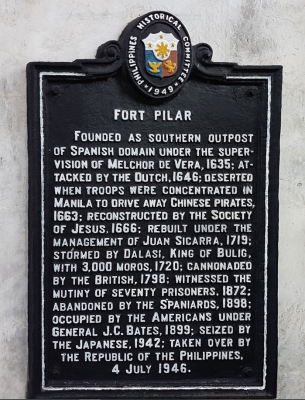 Short History of Fort Pilar: The Spaniards were confronting so much difficulty controlling the southern part of the Philippines. There were too many slave traders raiding the islands of Visayas and Luzon. Slave trading was lucrative. So in 1635 the Spaniards decided to construct a Fort in Zamboanga City, then known as Samboangan. Fort Pilar became the check point to prevent slave traders moving their captured victims from north to south. Rajah Dalasi of Bulig Maguindanao was determined to stop the Spaniards from policing the slave trading hence 3,000 Moros made the bloody attack of the fort in December 8, 1720 (feast day of the Immaculate Conception). It is a non-stop battle. Now the Moro leaders work through the legal system by means of the (Bangsamoro) to take Zamboanga City.
Some English to Chavacano Words:
Blessed, in Chavacano or chabacano is: Bendecido
Blessed in Chavacano or Chabacano is: Bendecido Alternate chavacano word: Alternate English word for “Bendecido” is Note: List…
Table, in Chavacano or chabacano is: Mesa
Table in Chavacano or Chabacano is: Mesa Alternate chavacano word: Alternate English word for “Mesa” is Note: List…
Blade, in Chavacano or chabacano is: Pilo
Blade in Chavacano or Chabacano is: Pilo Alternate chavacano word: Alternate English word for “Pilo” is Note: List…
A brief history of Zamboanga City
The entire Zamboanga peninsula was once the Zamboanga province. Zamboanga city was the capital of the Zamboanga province. In October 12, 1936 Zamboanga city became a chartered city and was carved out from the province but remained as the capital of the province. In September 17, 1952, via Republic Act No. 711 Zamboanga del Sur and Zamboanga del Norte was carved out from the Zamboanga province and from then on, the Zamboanga province no longer existed.
- June 23, 1635 should be symbolically known as “Dia del Chavacano de Zamboanga.” Why you might ask? This was the day that a permanent foothold was laid on Zamboanga by the Spanish government with the construction of the San José Fort (Fort Pilar), and the subsequent evolution and proliferation of a unique dialect/language based on ancient Creole Spanish that is called Chavacano de Zamboanga. Zamboanga City celebrates Fiesta Pilar on the 12th of October every year.
- The Republic of Zamboanga – Republic of Zamboanga (Revolutionary Government of Zamboanga): May 18, 1899 – Nov 16, 1899 (de facto) – This was the timeline when the new republic was independent and free of any foreign influence. It was short lived. But the Chavacanos tried.
- Here is an idea to Reboot the Republic of Zamboanga should the Philippines become a Federal form of Government just to give the Muslims an Islamic federal state in Mindanao: “Constitution of the Republic of Zamboanga“.
Zamboanga City does have one big sharp and irritating THORN on its side. That is the Bangsamoro (Muslim Homeland). Because of the Moros(Muslims), fort pilar was built. The moros refuse to live under the umbrella of the laws of the Philippines, they want their Islamic laws to be the governing rule of the land.
Zamboanga is about peace and unity where all Filipinos with different creeds and ethnicity have ONE homeland. The Bangsamoro does not believe in the Philippine Homeland. They want to create their own Islamic Homeland.
Zamboanga advocates the true meaning of the “Separation of Church and State“. “Let there be freedom of religion, but keep religion separate from government. A country that bows down to the laws of religion will one day be governed by religion.” FHM
Zamboanga City will continue to be the champion against the Bangsamoro. The Bangsamoro lied when it said that the moros were the original inhabitants of Mindanao, Sulu, and Palawan. The Bangsamoro leaders are uniting the Muslims (Moros) against the Non-Muslims. They are using non-muslim politicians as their main weapons of influence through bribery. They are separating themselves from the rest of the Filipinos by establishing their own Islamic Homeland. Bangsamoro is not about UNITY. It is about separatism and dominance.
Zamboanga’s fort pilar defended against the invasion of the Moros in the 17th century and to this day Zamboanga City continues to defend against the attacks of the Bangsamoro. Zamboanga City will continue in its campaign against the Bangsamoro militias (terrorist groups), the MILF and the MNLF. The Bangsamoro is not about PEACE. It is about DOMINANCE and take over.
The MNLF attacked Zamboanga City last September 9, 2013 (21 day siege), lives were lost, properties destroyed, and over 100,000 residents were displaced. The zamboangueños will not ever forget this atrocity.
Zamboanga is unique. It has 98 barangays and its own language.
Learn Chavacano de Zamboanga, The language of Zamboanga City
Chavacano is the unique native dialect of the city, a mixture of Spanish and various other local dialects and international languages, and is one of the oldest spoken language in the country reflecting a rich linguistic history of its people. English is widely spoken around town, and is the main language of education and international commerce. Numerous international languages, like German, Chinese, Japanese, Arabic, Italian, and Spanish, are spoken here, giving light to its historical importance as an international investment and destination haven for over three-hundred years.
Many pronounce the “V” as “B”. It is OK to pronounce V as B in our dialect. But please be educated. Go ahead and say it as chabacano but write it down as CHAVACANO.
Visit the interactive Chavacano online Dictionary created by a Zamboangueño, Franklin H. Maletsky. This is where you can collaborate and help keep the Chavacano dialect alive.
Government of Zamboanga City, Philippines
The location of the zamboanga city hall is witin the barangay of Zone IV. City Hall Valderrosa Street Zone IV, Zamboanga City, Philippines 7000
Elected Government Officials of Zamboanga City for the term of 2025-2028
Mayor of Zamboanga City: Khymer Adan Olaso
Vice-Mayor of Zamboanga City: Maria Isabelle G. Climaco-Salazar
Representative District I: CHUA, KAT SIKAT
Representative District 2: PEREZ, KAP JERRY TOTONG
Councillors for District I SADAIN, ATTY. MEL (NP) | Councillors for District 2 SIASON, JAMES (LAKAS) |
Elected Government Officials of Zamboanga City for the term of 2022-2025
Mayor of Zamboanga City: John M. Dalipe
Vice-Mayor of Zamboanga City: Josephine E. Pareja
Representative District I: Congressman Khymer Adan Olaso
Representative District 2: Congressman Manuel Jose M. “Mannix” Dalipe
Councillors for District I
| Councillors for District 2
|
Elected Government Officials of Zamboanga City for the term of 2019-2022 | |
|
|
Location of Zamboanga City, Philippines
- Located at the tip of the zamboanga peninsula within region 9 in Mindanao.
- How big is Zamboanga City? Total Land Area: 1,483.38 square kilometers or 572.73 square miles
- Elevation: Elevation varies, From the coastlines to about 1 kilometer in. It starts at 2 meters to 3 meters as you move in and it gradually increases. The inland mountains are as high as 1000 meters.
- Zip Code of Zamboanga City: 7000
- Phone Area code: 62
- When you call from outside the Philippines to a land line in Zamboaga City you dial first your Int’l access code, then the Philippines country code (63) , Zamboanga’s area code (62), then the local number. From a cell phone: 1st the Intl’l access code, then P.I. Country code (63), the cell phone number.
Featured News of the Philippines
January 7, 2026
1️⃣ Andas for Traslación 2026 now ready, with upgrades
The Andas carrying the Black Nazarene for January 9 Traslación features new steering wheel and reinforced underchassis to handle massive devotee crowds safely.
2️⃣ Over 3,500 affected by Mayon volcano unrest
NDRRMC reports 3,515 people from 964 families evacuated in Albay due to recent magmatic eruptions, ashfall, and pyroclastic flows; all in permanent danger zone.
3️⃣ Magnitude 6.4 quake hits off southern Philippines
USGS detects 6.4 quake off Davao Oriental coast—no tsunami threat reported, but locals feel shaking; no immediate damage confirmed.